
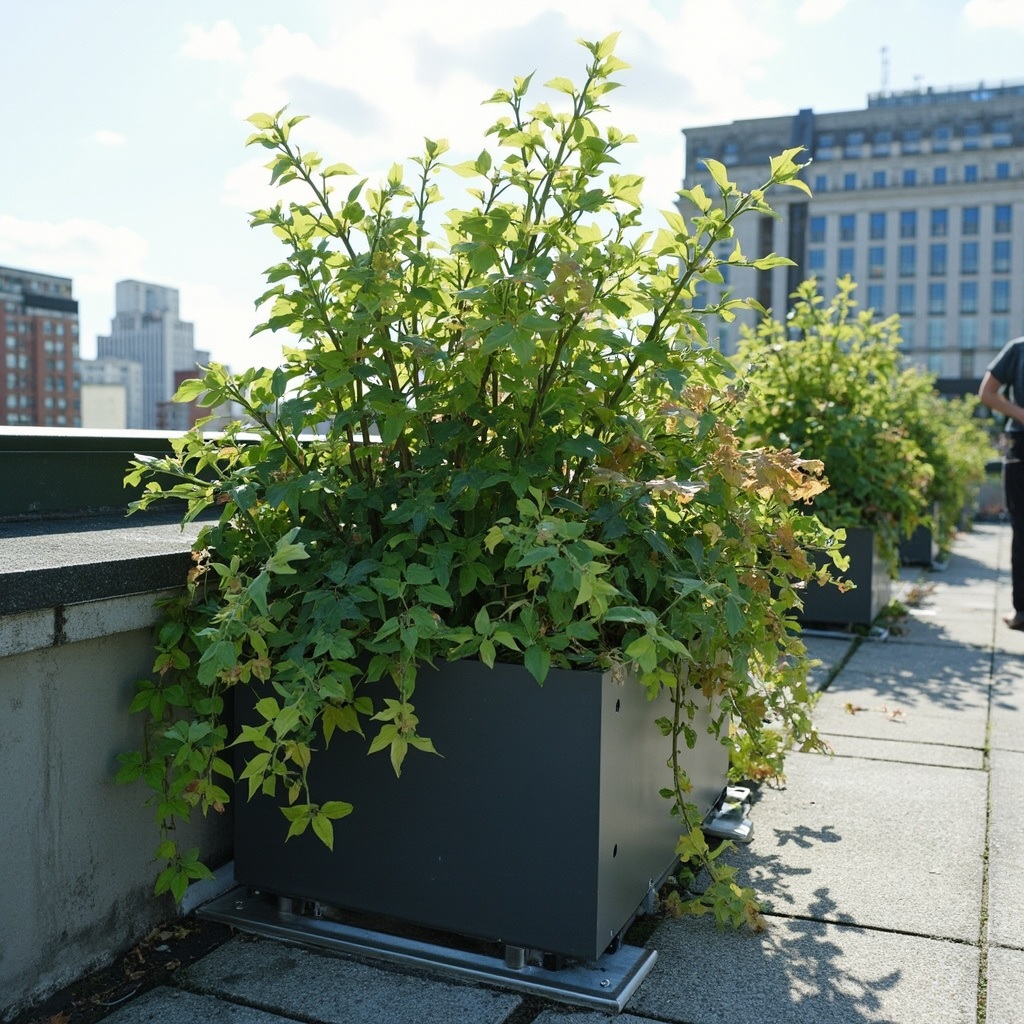
 You have spent thousands on a rooftop garden. You picked the perfect aluminum planters, selected the soil, and arranged your greenery like a living art piece. Then a gust of wind hits. And your planter, along with your investment, becomes a dangerous projectile. That is the reality no one talks about until it is too late. The difference between a garden that stays and one that flies is not the planter itself. It is what holds it down.
The physics are brutal. Rooftops are wind tunnels. There is no tree line to break the force, no neighboring buildings to buffer the pressure. When wind sweeps across an open roof, it creates a vacuum effect. That vacuum pulls upward on the flat surfaces of your Aluminum Alloy Planter Box that weighs fifty pounds on the ground can feel like it weighs nothing when the wind hits just right. The lightweight nature of aluminum, which makes it so easy to move and arrange, also makes it vulnerable. Without a proper anchoring system, you are essentially displaying expensive kites.
The market is flooded with solutions that look good on paper but fail in practice. Adhesive pads that lose grip in the heat. Small plastic clips that snap under pressure. Sandbags that rot and leak. These are not anchors. They are placebos. A real anchoring system for rooftop aluminum planters must address three specific forces: lateral sliding, direct uplift, and the leverage effect of tall plants. If your system only handles one, you are still at risk.
The best approach is a mechanical interlock system that ties the planter directly to the roof structure. This does not mean drilling through your waterproof membrane. That is a disaster waiting to happen. Modern systems use weighted base plates that sit on top of the roofing material, combined with adjustable tension cables that attach to the planter rim. The weight of the base plate provides the downward force. The cables prevent the planter from shifting sideways. The result is a system that works with the wind, not against it.
For those who cannot or will not attach anything to the roof, the solution is internal ballasting. This is where the planter design itself matters. Cheap aluminum planters have thin walls and flat bottoms. They cannot hold enough weight to resist uplift. Premium planters come with built-in anchor points and reinforced bottom channels. You fill the bottom third with a heavy aggregate, not just soil. That aggregate becomes the counterweight. The anchor points lock the aggregate in place so it does not shift. Suddenly, your lightweight planter has the stability of a concrete block without the permanent weight.
Do not overlook the role of the plants themselves. Tall, bushy plants act like sails. They catch the wind and multiply the force on the planter. If you are growing ornamental grasses or small trees on a rooftop, you need to factor in the wind load of the foliage. A smart anchoring system accounts for this by distributing the force across multiple points. One anchor at the center is not enough. You need anchors at the corners, and for very tall planters, anchors at the mid-point as well.
The real advantage of a good anchoring system is not just safety. It is freedom. When your planters are secure, you can use the entire roof. You can place planters at the edges, where the view is best, without worrying about them tipping over. You can install taller plants without fear. You can water and maintain without constantly checking if the planter has shifted. The system becomes invisible. It works so well that you forget it is there. That is the sign of good engineering.
Do not wait for the first storm to test your setup. By then, it is too late. A single gust can send a planter crashing through a window or onto a street below. The liability is enormous. The cost of a proper anchoring system is a fraction of the cost of replacing a planter, repairing a roof, or dealing with an insurance claim. It is the cheapest insurance you will ever buy.
Your rooftop garden should be a sanctuary, not a hazard. The wind will come. The question is whether your planters will stay. Choose the anchoring system that treats the problem seriously. Your plants, your property, and the people below will thank you.
